Air freight for every commodity: from general cargo to dangerous goods, semiconductors and full charters
Eight products, one standard: from general cargo to theft-prone and valuable goods, dangerous goods, temperature-controlled shipments, live animals, semiconductors and full freighter charters. Each product follows the IATA rules for its commodity. You learn what your goods need, and we take care of booking, documents and handling.

General cargo: reliable air freight for standard shipments
General cargo covers all goods that need no special handling: machine parts, spare parts, textiles, samples, printed matter and industrial goods. It is the basis of air freight and is booked as consolidation or direct shipment, depending on urgency and budget.

Requirements for your shipment
- Air-worthy packaging: stable, stackable where possible and marked with shipper, consignee and air waybill number.
- Exact dimensions and weights per piece. The higher of gross and volumetric weight is charged.
- Commercial invoice and packing list for customs at destination.
- Electronic export declaration for exports from the EU above the value and weight limits.
Handling on the ground and in the air
- Security screening before departure, unless the shipment comes from a known consignor.
- Build-up on pallets or in containers at the handling agent.
- Transport in the lower deck of passenger aircraft or on freighters.
What Logselect takes care of
- Comparison of consolidation and direct options
- Pick-up, export clearance and booking
- Import clearance and delivery at destination
- Digital shipment status and documents
Vulnerable cargo: secure air freight for theft-prone goods
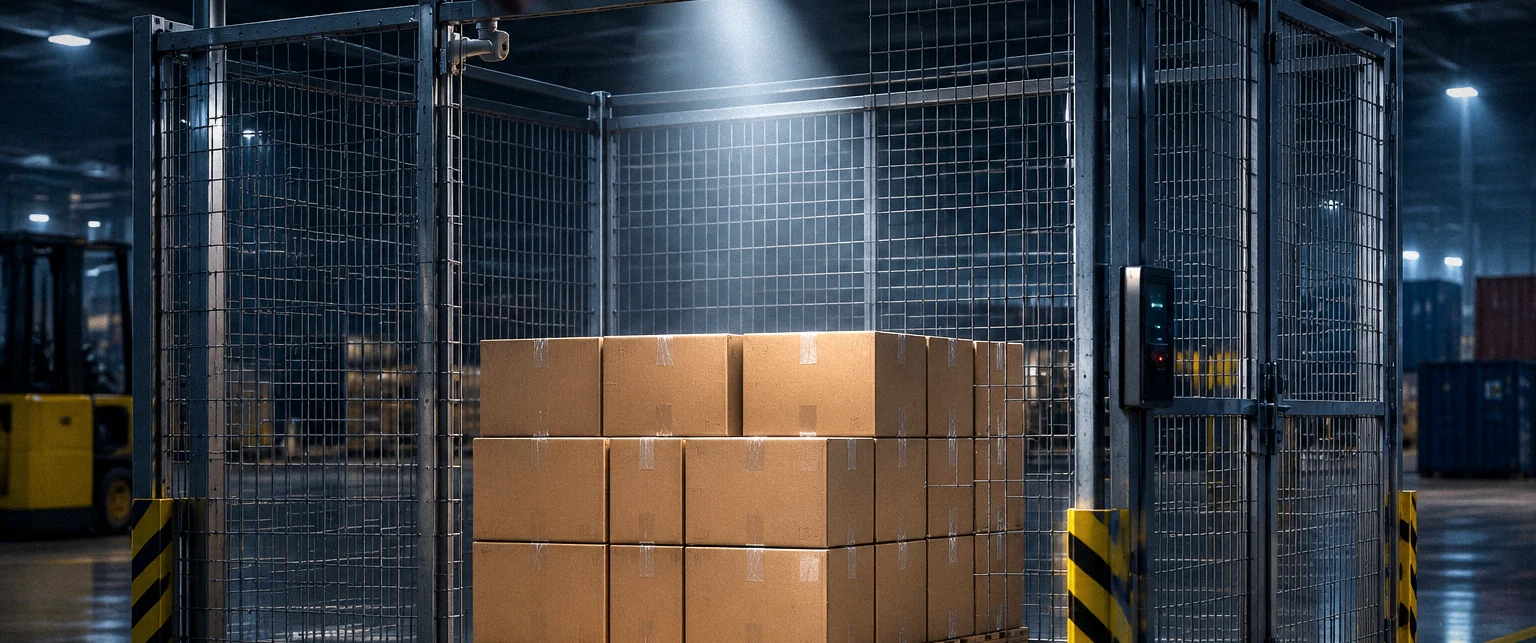
Vulnerable cargo (IATA special handling code VUN) covers goods that are particularly attractive to thieves but stay below the threshold for valuable cargo. Typical examples are smartphones, laptops, consumer electronics, watches, branded goods and aircraft spare parts.
Requirements for your shipment
- Exact dimensions for every piece are mandatory at booking for many airlines.
- Sturdy, intact packaging whose condition is recorded at acceptance. We recommend neutral packaging without brand names.
- Vulnerable cargo declaration with commodity, number of pieces, weight and packing, where the airline requires it.
- Lithium batteries: devices with batteries are also subject to the dangerous goods rules (see DANair).
Handling on the ground and in the air
- Storage in secured, camera-monitored areas at the handling agent.
- Many airlines do not allow VUN cargo in mixed consolidations, unless the whole consolidation is vulnerable cargo.
- Supervised transfers and short dwell times reduce the risk of theft.
What Logselect takes care of
- Routing via direct flights or few transfer points
- Booking with airlines that offer secured VUN handling
- Tight hand-over windows from pick-up to acceptance
- Digital shipment status from acceptance to delivery
Valuable cargo: air freight for precious metals, jewellery and banknotes
Valuable cargo (IATA code VAL) is defined in IATA Resolution 012. It includes any shipment with a declared value for carriage of USD 1,000 or more per kilogram gross weight, as well as gold and platinum, banknotes and securities, diamonds and other gemstones, pearls, and jewellery and watches made of precious metals.

Requirements for your shipment
- Undamaged outer packaging without visible signs of damage. Damaged pieces are not accepted.
- Seal and strapping: an intact seal and metal straps are recommended.
- Air waybill: the nature of goods states VAL, and the handling information includes the consignee’s phone number.
- Declared value and insurance: airline liability is limited, and some airlines do not accept a declared value for carriage. Cargo insurance closes the gap.
Handling on the ground and in the air
- Storage in a locked room reserved for valuable cargo.
- Escort from acceptance until hand-over to the consignee, except while the shipment is stored securely in flight.
- Damage is documented and photographed immediately and reported to the airline.
What Logselect takes care of
- Checking airline acceptance and value limits before booking
- Coordination of secured pick-up and escort
- Correct VAL entries on the air waybill
- Cargo insurance on request
Dangerous goods by air: shipping in line with IATA DGR
The IATA Dangerous Goods Regulations (DGR) are the worldwide reference for dangerous goods by air and are based on the ICAO Technical Instructions. They divide dangerous goods into nine classes, from explosives and gases to lithium batteries. In 2026 the 67th edition applies, and from 1 January 2027 the 68th edition.

Requirements for your shipment
- Classification is the shipper’s duty. The safety data sheet alone is often not enough to determine the transport classification.
- Shipper’s Declaration for Dangerous Goods for most dangerous goods shipments, plus UN number, class and net quantity per piece at booking.
- UN-approved packaging with the prescribed marks and hazard labels.
- Trained staff: anyone preparing dangerous goods for air transport needs function-specific, competency-based training.
Lithium batteries: what applies now
- Devices with lithium batteries are dangerous goods, but under Section II of packing instructions 966 to 970 they are often exempt from the full declaration (codes ELI and ELM).
- Since 1 January 2026, lithium-ion batteries packed with equipment must be shipped at a state of charge of no more than 30 per cent.
- The battery manufacturer must confirm the UN 38.3 test.
What Logselect takes care of
- Pre-check of declaration, marking and labels before booking
- Choice of passenger or cargo aircraft (CAO) depending on the goods
- Booking with UN number, class and quantities
- Checking operator variations of the airline
Temperature-controlled air freight for pharma and perishables
For pharmaceuticals and life science products, the IATA Temperature Control Regulations (TCR) apply. They bundle packaging, labelling, documentation and the responsibilities of shippers and carriers. Perishables such as fresh food are governed by the IATA Perishable Cargo Regulations (PCR).

Requirements for your shipment
- Defined temperature range at booking, stating whether it applies to the flight or also to storage and transfers.
- IATA Time and Temperature Sensitive label, mandatory since 2012 for healthcare shipments booked as temperature-sensitive. The temperature range is entered in °C and in English.
- Suitable packaging: passive boxes with cooling elements or active containers with their own temperature control (code ACT).
Handling on the ground and in the air
- Seamless cold chain from pick-up to delivery, including at transfer points.
- Pharma carriers and handlers certified under IATA CEIV Pharma.
- Temperature monitoring with data loggers for traceable proof.
What Logselect takes care of
- Selection of routes and handlers with temperature-controlled facilities
- Booking of active containers on request
- Correct handling codes and temperature data on the air waybill
- Short connection times to protect the cold chain
Live animals by air: species-appropriate transport under IATA LAR
Whether pets, horses, breeding animals, ornamental fish or zoo animals: live animals travel under the IATA Live Animals Regulations (LAR), the worldwide standard for animal welfare in air transport. In 2026 the 52nd edition applies. It specifies containers, documents, labelling and care for each species.

Requirements for your shipment
- LAR-compliant container in the right size: well ventilated, leak- and escape-proof, with handholds and fixed food and water bowls.
- Shipper’s Certification for Live Animals in duplicate. It must be signed by the shipper, not by the forwarder.
- Health certificates and permits for export, transit and import, plus CITES permits for protected species.
- Labels “Live Animals” and “This Way Up” plus a 24-hour emergency contact.
Animal welfare rules
- Animals must be healthy and fit to fly. Pregnant animals need a veterinary certificate.
- Animals that gave birth within the previous 48 hours are not accepted.
- Sedation only with veterinary approval, recorded on the container.
- Live animals must be the only entries on the air waybill. Some species may only travel on freighters.
What Logselect takes care of
- Checking which airlines accept the species and on which routes
- Advance arrangements with the airline before booking
- Short routings with few transfers and suitable temperatures
- Coordination of documents, vet appointments and border controls
Semiconductor logistics: air freight for chips, wafers and fab equipment
SEMair covers the whole semiconductor supply chain: wafers and photomasks from the front end, finished chips and modules, and the production equipment itself, from lithography and etching to deposition tools. These goods react to shock, vibration, humidity and temperature, and many fall under export controls.

Requirements for chips and wafers
- Cleanroom-compliant packaging for wafers and photomasks, handled according to the customer’s SOPs.
- ESD-protective packaging against electrostatic discharge for electronic components.
- Defined temperature range: depending on the material between −20 °C and +25 °C, actively or passively protected.
- Protection against humidity and vibration along the whole route.
Requirements for production equipment
- Custom crates with shock-absorbing interiors. Large systems are split and shipped on several flights.
- Shock and tilt indicators, checked at pick-up, before departure and at release at destination.
- Air-ride trucks for pre- and on-carriage and main-deck capacity on freighters for heavy and outsized pieces.
- Export control: since 15 November 2025 the EU dual-use list also covers lithography, etching and atomic layer deposition equipment, EUV pellicles and masks.
What Logselect takes care of
- Freighter and main-deck capacity for outsized equipment
- Screening shipment data against export control lists before booking
- Air-ride pick-up and planeside delivery for urgent shipments
- GPS and sensor monitoring with alerts for shock or temperature
Air cargo charter: a whole aircraft for your shipment
When scheduled capacity is not enough, the deadline is tight or the cargo is too large for regular flights, CHTair charters a freighter for you. Either the whole aircraft (full charter) or part of it (part charter), on the route and at the time your cargo is ready.
What we need for a quote
- Commodity, including any dangerous goods, live animals or other special handling.
- Pieces with dimensions and weights, especially the heaviest and the largest piece. They decide which aircraft fits.
- Airports of departure and destination and the earliest date the cargo is ready.
- One-off or series: several rotations can often be planned at better rates.
Permits and planning
- Landing and overflight permits as well as take-off and landing slots must be secured for every flight.
- Airlines from outside the EU need a TCO authorisation from EASA for commercial flights into the EU. The application must be filed at least 30 days before the first flight.
- Handling agents and customs are prepared at both ends before the aircraft arrives.
- Lead time depends on route and aircraft type: often around a week, shorter in urgent cases.
What Logselect takes care of
- Comparing aircraft types and offers from several airlines
- Coordination of permits and slots with the operating airline
- Load planning and supervision on site during loading
- Handling, customs and delivery at both ends
Approximate maximum payloads. The usable payload depends on route length, fuel and the dimensions of the cargo.
All AIRselect products compared
| Product | IATA codes | Typical goods | Key documents | Rules |
|---|---|---|---|---|
| GENair | GEN | Machine parts, spare parts, textiles, samples | Air waybill, commercial invoice, packing list | Airline conditions, customs law |
| VUNair | VUN | Smartphones, laptops, electronics, watches, branded goods | Air waybill, vulnerable cargo declaration if required | Airline conditions |
| VALair | VAL | Gold, platinum, jewellery, gemstones, banknotes, securities | Air waybill with VAL entry, value declaration | IATA Res. 012 |
| DANair | DGR · ELI · ELM · CAO | Chemicals, gases, lithium batteries, paints, aerosols | Shipper’s Declaration, safety data sheet | IATA DGR |
| TEMair | PIL · PER · COL · CRT · ERT · FRO · ACT | Medicines, vaccines, samples, fresh food, flowers | Air waybill with temperature range, TTS label | IATA TCR · PCR |
| LIVair | AVI | Pets, horses, breeding animals, fish, zoo animals | Shipper’s Certification, health certificates, CITES if required | IATA LAR |
| SEMair | HEA · BIG | Wafers, photomasks, chips, lithography and etching equipment | Air waybill, export licence if required, monitoring data | EU dual-use regulation, customer SOPs |
| CHTair | – | Large volumes, outsized and urgent cargo, project cargo | Charter agreement, air waybill, permits | Landing and overflight permits, EASA TCO |
Air cargo security: shipments must be screened before departure, either by a regulated agent or at a known consignor approved by the German Federal Aviation Office (LBA).
Frequently asked questions about special air freight
What is the difference between vulnerable cargo (VUN) and valuable cargo (VAL)?
Valuable cargo covers shipments with a declared value of USD 1,000 or more per kilogram gross weight, plus certain goods such as gold, banknotes, gemstones and jewellery. Vulnerable cargo means theft-prone goods below this threshold, such as smartphones, laptops or branded goods.
Are smartphones and laptops dangerous goods in air freight?
Devices with lithium batteries count as dangerous goods under IATA DGR, but are often exempt from the full declaration under Section II of packing instructions 966 to 970. Marking and quantity limits still apply.
Which edition of the IATA Dangerous Goods Regulations applies?
In 2026 the 67th edition of the IATA DGR applies. From 1 January 2027 the 68th edition applies.
Which temperature ranges are used in air freight?
Common ranges are +2 to +8 °C (COL), +15 to +25 °C (CRT), +2 to +25 °C (ERT) and frozen (FRO). Pharma shipments also carry the IATA label for time and temperature sensitive goods.
Do I need known consignor status?
No, the status is not mandatory. Shipments from shippers without it are screened by a regulated agent before departure, which can add time and cost.
Which documents do I need to ship live animals by air?
You need the Shipper’s Certification for Live Animals in duplicate, signed by the shipper, plus the health certificates and permits of the export, transit and import countries. Protected species also need CITES permits.
Do semiconductor production machines need an export licence?
Often, yes. Since 15 November 2025 the EU dual-use list also covers lithography, etching and atomic layer deposition equipment, EUV pellicles and masks. Whether a licence is needed depends on the technical specification and the destination country.
When is an air cargo charter worth it?
A charter pays off for large volumes, for outsized pieces that do not fit on scheduled aircraft, for very tight deadlines or when a destination has no direct service. With a part charter you share the aircraft and its cost with other shippers.
Special cargo coming up?
Send us goods, dimensions, weight and route. We check the requirements and send you a quote.